
Office Shelving Ideas for Home Offices & Small Workspaces

Office Shelving Ideas: Key Takeaways
- A well-designed office starts with getting things off your desk. Good shelving handles the clutter so your workspace stays usable
- Vertical storage frees up your desk, which makes it easier to focus without constantly moving things around. Shelves placed with intention help guide your workflow, supporting smoother transitions and gentler mental shifts throughout the day
- Small offices don’t give you much room to work with. Every shelf has to earn its keep. Corners awaken, walls become partners, and even the narrowest spaces find new purpose through thoughtful, minimal shelving
- In the debate between floating shelves and bracketed ones, the answer isn’t one or the other, it’s whichever best honors the weight of your work and the calm you want around it
Have you noticed how the home office has quietly become the heart of the modern household?
A place where meetings, planning, focus, and creativity all need to coexist, sometimes within the same hour.
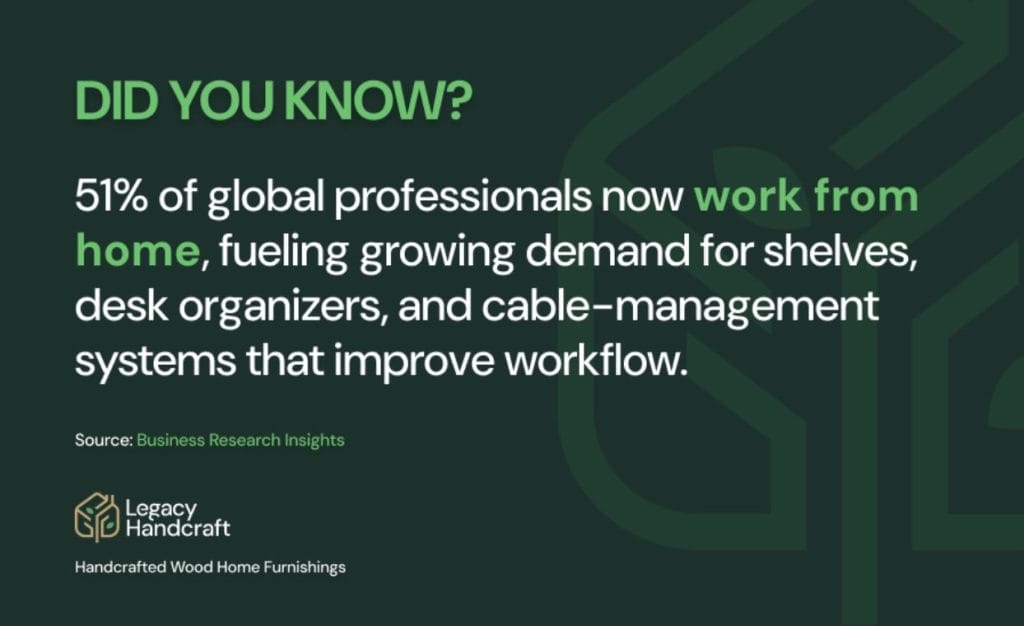
With nearly 52% of American employees now working from home at least part-time, our workspaces are being asked to do more than ever before.
The right office shelving ideas lift papers off your desk, bring order to your day, and turn a corner or wall into something purposeful. Solid hardwood shelving, crafted with intention, adds warmth and makes the space feel more grounded, which helps you stay focused longer.
So the question becomes: How can your shelves support not just your office, but the way you work?
In this guide, we’ll explore:
- Office shelving ideas that boost productivity
- Wall-mounted shelving layouts for home offices
- Space-saving solutions for small workspaces
- Corner shelving that transforms unused areas
Looking for shelving that actually fits how you work?
Shop Now
Why Office Shelving Ideas & Execution Matter for Productivity
A productive workspace isn’t just about the desk you sit at, it’s about everything that supports it. The right shelving frees your mind as much as it frees your surface space.
How Strategic Office Shelving Improves Workflow, Focus & Daily Flow
Thoughtful shelving turns vertical wall space into a quiet partner in your productivity. When every item has a home, your desk becomes a place for thinking and not storage.
Here’s how the right shelving setup supports better work:
- Frees valuable desk space so your surface becomes a workspace, not a storage bin
- Reduces visual clutter, which research shows can interrupt concentration and increase stress
- Creates designated zones for documents, notebooks, supplies, and tech, making transitions between tasks smoother
- Improves cognitive flow by keeping essential items within reach and removing distractions from your line of sight
- Encourages consistent organization, especially with solid hardwood shelving that feels lasting and intentional
- Adds “visual quiet” through clean lines, warm materials, and balanced styling, a subtle but powerful boost to daily focus
Pro tip: If you multitask often, use tiered shelving: upper shelves for décor and infrequent items, middle shelves for daily tools, and lower shelves for baskets or bins that hide visual noise.
The average home office doubles as at least two other spaces (storage, guest room, or even dining area), which makes smart office shelving ideas a lot more important
Home Office Shelving Ideas for Everyday Workspaces
The best home office shelves do more than hold supplies. They create structure, calm, and flow. When thoughtfully placed, they turn unused wall space into an extension of your workspace, helping you stay focused while keeping the room visually balanced.
Smart Wall-Mounted Shelving for Organized Workdays
Wall-mounted shelving is one of the simplest and most transformative ways to elevate a home office. It keeps essential items off your desk, opens up surface space, and anchors the room with a clean, purposeful layout.
Strong office shelving ideas for practical wall-mounted setups:
- Install above-desk shelving to keep notebooks, planners, and small bins within easy reach
- Use long floating shelves to stretch the room visually and maintain an open, cohesive look
- Avoid overcrowding, leave open areas between items to prevent visual stress and maintain focus
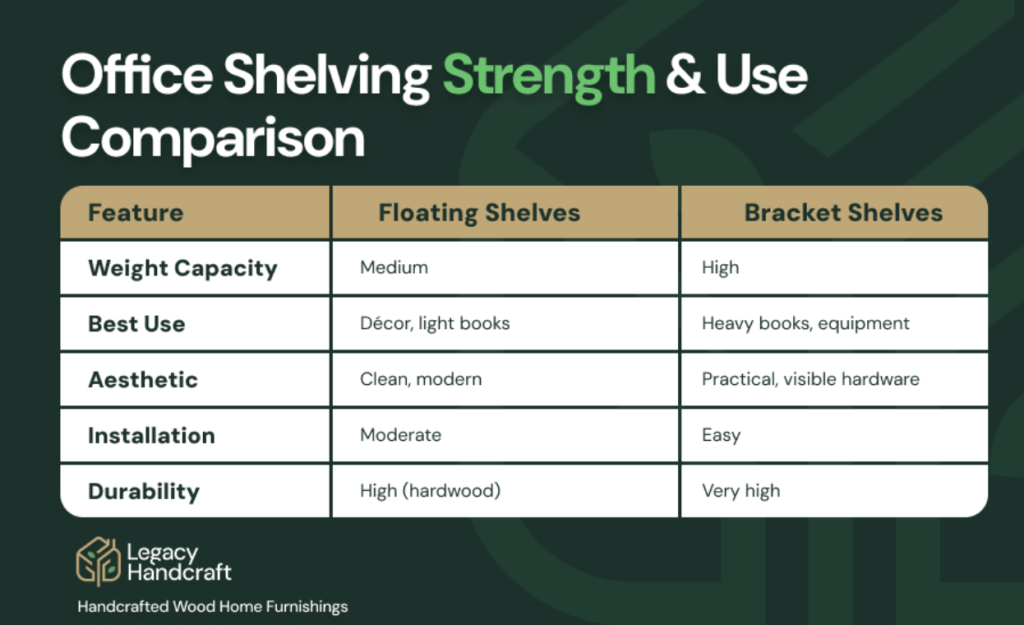
Floating Shelves vs. Bracket Shelves: Choosing What Works for You
Both styles have a place in a productive home office. It simply depends on your storage needs and design preferences.
Floating shelves are ideal when you want:
- A clean, modern aesthetic without visible brackets
- Display space for décor, greenery, or lightweight items
- A lighter, more minimal visual profile
Bracket shelves are ideal when you need:
- Extra strength for books, equipment, or heavier office tools
- More traditional or industrial design elements
- Adjustable configurations for changing storage needs
Design tip: Mix the two styles when needed: floating shelves above the desk for openness, bracket shelves on adjacent walls for heavier storage.
Shelving Placement Above Desks: Height, Ergonomics & Lighting
Placement matters as much as the shelving itself. When shelves are hung thoughtfully, they support your workflow without disrupting ergonomics or lighting.
Keep these placement guidelines in mind:
- Mount shelves 16–24 inches above the desk to keep them accessible without interfering with your monitor or forward posture
- If you use a large monitor, leave enough space so the shelf doesn’t cast harsh shadows or compete visually
- Use under-shelf lighting or small sconces to reduce shadows and add warmth to the workspace
- Align shelving edges with your desk or wall features for a cleaner architectural look
Browse our office shelving collection to find sizes and styles that fit your layout.
Shop Now
Small Office Shelving Ideas That Maximize Space
Small offices ask more of every inch, which makes shelving one of the most powerful tools you can use. When floor space is limited, the walls become your greatest asset.
1. Use Vertical Wall Shelving to Build Up, Not Out
Going vertical when thinking about office shelving ideas is the fastest way to expand storage without shrinking the room.
Great options include:
- Floor-to-ceiling shelving walls that instantly increase capacity
- Ladder-style shelving for a lighter, modern profile
- Slim vertical stacks that fit between windows or doors
- Tall single shelves that draw the eye upward and elongate the room
Tip: Leave a few inches of breathing room at the top of each shelf to prevent a cramped look.
2. Transform Corners Into Functional Storage
Small offices often have corners that go completely unused, which makes them perfect for developing office shelving ideas.
High-impact corner ideas:
- Floating corner shelves for décor or daily essentials
- L-shaped shelf layouts that wrap around two walls seamlessly
- Multi-tier corner towers that provide deep storage without taking up floor space
Design insight you might not know: Corners styled with plants or warm wood shelf tones can soften sharp angles and make the room feel more inviting.
3. Keep Shelving Minimal to Maintain Clarity & Focus
In a compact workspace, visual clarity directly affects productivity. Minimal shelving layouts help the room feel calm and breathable.
To keep things light:
- Choose warm, natural wood shelves that brighten the space without overwhelming it
- Style only what you need, a few books, a plant, a candle, a notebook
- Embrace negative space to give your eyes room to rest
- Use matching bins or boxes to hide items that visually clutter
Pro tip: One long floating shelf is often more effective than three short ones. It visually expands the room and creates a more balanced look.
If you want to read more about how floating shelves work, read our guide.
Choosing the Right Shelving Material for an Office
The material you choose for office shelving shapes more than the look of your workspace, it shapes how it performs. Wood that holds its strength, resists sagging, and brings a sense of calm into the room becomes part of your daily rhythm.
To choose shelving that supports both your workflow and your long-term needs, consider:
- Solid hardwood vs. manufactured materials: Solid wood (like white oak, walnut, or maple) offers the load-bearing strength offices demand. Engineered materials may bow or delaminate over time, especially under heavy books.
- Durability under real office weight: Hardwood shelves resist sagging far better than MDF or plywood, a crucial factor when storing equipment, binders, or reference books you reach for daily.
- Consistency and stability over time: Dense grain structures mean fewer warps, fewer dips, and shelves that stay beautifully level through years of work.
- Matching wood tone to office style:
- White oak for modern, Scandinavian, or minimalist interiors
- Reclaimed wood for rustic warmth and texture
- Walnut for a refined executive feel
- Light maple for bright, clean-lined workspaces
- Finish options that enhance the grain: Natural oils, matte finishes, or neutral stains bring out the wood’s character and soften the workspace visually.
Explore heirloom-quality options like White Oak Shelves or Reclaimed Wood Shelves for materials that support both your productivity and your sense of place.
Not all office shelving ideas can be built the same as solid hardwood can handle real weight, while cheaper materials tend to bow or weaken over time
Legacy Handcraft: Shelving Built to Support Your Best Work
Shelving plays a quiet but essential role in that experience. It lifts the weight off your desk, brings structure to your workflow, and gives every tool, book, and idea a place to belong.
At Legacy Handcraft, we build shelves with that purpose in mind. Each piece begins with solid hardwoods chosen for their strength, stability, and natural beauty, materials that hold up under real daily use and grow richer with time.
Why Legacy Handcraft’s shelving makes a difference in the office:
- Heirloom-level hardwoods that resist sagging and stay true through years of use
- Precision craftsmanship that blends durability with clean, modern lines
- Designs that bring warmth into tech-heavy office environments
- Custom sizes and wood options to match your workflow and workspace
- Finishes that highlight natural grain, creating a calming visual anchor
In an office that works harder than ever, your shelves should do the same. Choose pieces that stand the test of time and help you build a workspace that feels grounded, intentional, and beautifully your own.
Explore our handcrafted solid wood floating shelves
Shop Now
Office Shelving Ideas: FAQs
If you’re still not sure about your office shelving ideas, you might find some additional answers below.
What type of shelving works best in a home office?
The best home office shelving ideas combine strength, accessibility, and clean design. Floating shelves are ideal for a minimal, modern look, while bracketed or built-in shelves are better for heavy loads like books or equipment. Solid hardwood shelves are recommended for long-term durability, especially in offices where shelves are used daily.
How high should office shelves be mounted?
Office shelves are typically mounted 16–24 inches above the desk to keep items within easy reach without interfering with monitors or task lighting. For decorative shelving or higher storage, space shelves 12–18 inches apart vertically, adjusting for the height of books, bins, or display pieces.
Are floating shelves strong enough for office use?
Yes. As long as they’re made from solid wood and installed with high-quality hardware anchored into studs. Hardwood floating shelves can safely hold books, décor, office supplies, and even small equipment. MDF or thin engineered shelves, however, may sag under weight and aren’t recommended for office use.
What office shelving ideas work best for small spaces?
Small offices benefit from office shelving ideas with vertical, corner, and slim-profile shelving. Floor-to-ceiling shelves maximize height, floating corner shelves reclaim unused space, and long minimal shelves visually stretch the room. Light wood tones and uncluttered styling help keep the space feeling open.
Should I choose floating shelves or bracket shelves for my office?
Choose floating shelves if you want a clean, modern aesthetic and plan to store lighter items. Choose bracket shelves for heavy books, binders, or equipment that requires additional support. Many home offices use a combination of both for aesthetics and strength.
What materials are best for office shelving ideas?
For executing your office shelving ideas, try to use solid hardwood (white oak, walnut, maple, or reclaimed wood) provides the best durability and load-bearing capacity for office use. These materials resist sagging and maintain structural integrity over years of daily work. Manufactured materials like MDF are more prone to warping and delamination under weight.
Ready to upgrade your workspace?
Shop Now


