
Bookshelf Organization Ideas for a Stylish, Clutter-Free Home

Bookshelf Organization Ideas: Key Takeaways
- Think of your bookshelf like a personal snapshot, it should whisper something about who you are every time someone walks by. Tuck a tiny plant beside your favorite mystery novel. Frame a quote that makes you smile
- Organization should feel effortless, not rigid. Blend function with flow, group by color, height, or theme, but leave room for visual breathing space so your shelves don’t feel overworked
- Small shelves thrive on simplicity. Less is more. A few carefully chosen books and accents can make even a compact bookshelf feel styled, open, and elevated
- Natural materials make all the difference. Solid and reclaimed wood shelving, like Legacy Handcraft’s handcrafted designs, adds character, balance, and timeless appeal that MDF or laminate just can’t match
- Maintenance is part of the magic. Switch out that beach photo for a candle when the weather cools. Your shelves can change with your mood, or the weather
If your bookshelf looks more “overflowing” than organized, you’re not alone.
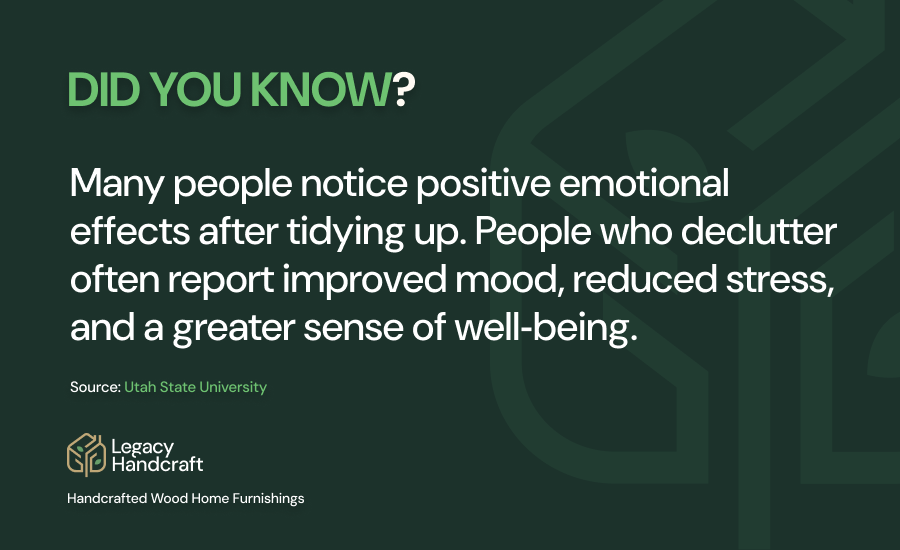
Around 54% of people say they feel overwhelmed by clutter in their home. It’s amazing how something as simple as an unorganized bookshelf can shift the entire mood of a space.
The good news is that a few smart organization ideas can completely change that, turning chaos into calm and giving your home a sense of balance and personality.
In this guide, we’ll talk about:
- The best bookshelf organization ideas you can try out today
- Some additional organizational tips you can use
- How to organize your bookshelf in 3 simple steps
- Give you additional ideas for tight spaces in your house or apartment
Redefine your space with handcrafted shelves.
Explore Legacy Handcraft
Best Bookshelf Organization Ideas To Transform Your Space
A well-organized bookshelf does more than hold your favorite reads, it sets the tone for your entire space.
Sort and Categorize Your Books First
Before you style, start with a reset. Take everything off your shelves and group your books by category, genre, or color, whatever makes the most sense for how you use them. This step not only helps you rediscover forgotten favorites, but it also gives you a fresh canvas to work from.
Tips to get started:
- Sort by purpose like everyday reads, reference books, or decorative editions
- Try arranging by height for a clean, structured look, or alphabetically if function comes first
- For design lovers, color-coded organization creates instant visual harmony
For styling inspiration that goes beyond sorting, explore A Guide to Styling Floating Shelves.
Try the Popular Color-Coded Method
Organizing by color is like giving your shelf its own outfit. It’s not for everyone, but when it works, it really works.
Tips for color organization:
- Keep neutral colors like white, tan, and gray evenly distributed for balance.
- Stack horizontally to break up long stretches of a single color.
- Add warm wood tones, like the floating bookshelf white oak, to soften and ground bold palettes.
Mix Books With Décor Items for Balance
Your bookshelf shouldn’t just be about books; it’s a chance to showcase personality and texture. Mixing in décor creates rhythm and gives the eye places to rest.
To strike the perfect balance try to:
- Pair books with ceramics, framed art, or small plants for a layered look
- Alternate between vertical and horizontal stacks to add dimension
- Use decorative bowls or candles to fill small gaps while keeping it cohesive
For more ideas, check out 7 Ways to Decorate with Floating Shelves.
Aesthetic Bookshelf Organization Tips for a Designer Look
When it comes to creating a bookshelf that feels curated and elegant, a few simple styling principles can make all the difference.
To make your shelves look like they were styled by a designer (without actually hiring one):
- Follow the rule of thirds: Divide each shelf visually into three parts, one for books, one for décor, and one left open. This mix of full and empty space creates rhythm and makes the design feel intentional rather than overstuffed.
Try balancing height and shape too; tall vases beside stacked books can guide the eye naturally across the shelf.
For a refined, architectural finish, consider natural wood shelving like the floating bookshelf black walnut.
- Blend textures and natural materials: Texture is what turns a flat bookshelf into a layered, lived-in display. Combine warm wood tones with ceramics, woven baskets, linen-bound books, and matte metal accents.
Natural contrasts, rough wood beside smooth glass, bring depth and warmth. Avoid too many glossy or synthetic finishes; natural materials always age more beautifully.
- Keep a cohesive color palette: Stick to two or three tones across your shelves. This doesn’t mean everything has to match; it just needs to belong. Choose a color story (like whites and tans, or dark woods and greens) and repeat those hues throughout.
For tips on choosing the right tones for your space, read Add a Modern Accent to Your Home with White Shelves.
Bring natural warmth and structure to your home.
Discover Legacy Handcraft designs.
How To Organize a Bookshelf Step by Step
Organizing your bookshelf doesn’t have to feel overwhelming, it’s all about creating a system that looks great and works for your lifestyle.
Step 1: Declutter Anything You No Longer Need
Let go of the books you bought for cover art but never opened. We’ve all been there. Keep the pieces that bring joy, use, or meaning and let go of anything collecting dust.
- Donate old paperbacks or duplicates
- Recycle worn-out dust jackets or broken décor items
- Keep space open for new finds; empty shelves add breathing room and visual balance
Think of this as a reset for both your shelf and your mindset.
Step 2: Use Vertical and Horizontal Stacks for Visual Interest
Books don’t always have to stand at attention. Let some lounge flat and top them with a quirky trinket, like a conversation starter waiting to happen
- Place heavier or larger books horizontally to anchor each section
- Use the tops of stacks for small décor items like vases or sculptures
- Keep similar colors or tones grouped together for a cohesive flow
This blend of structure and creativity gives your bookshelf a naturally curated look, like it’s evolved over time.
Step 3: Add Baskets or Bins for Hidden Storage
Not everything needs to be on display. Adding baskets or bins can hide the little things (cables, journals, stationery) that would otherwise make your shelves look cluttered.
- Choose woven, linen, or wood-tone baskets for a warm, cohesive finish
- Keep frequently used items in easy reach, top shelves are best reserved for décor
- Match your storage tone with your shelving for a seamless aesthetic, try pairing with the floating bookshelf barn plank for rustic charm and timeless warmth

Small Bookshelf Organization Ideas for Tight Spaces
Even the tiniest spaces can deliver big style. With a few clever bookshelf organization tricks, you can make even the tiniest nook look intentional, open, and beautifully curated.
Use Adjustable Shelves for More Flexibility
Adaptability is everything in tight spaces. Adjustable shelving lets you tailor your layout as your book collection (or décor obsession) grows.
- Arrange shelves to fit taller items like plants or art prints
- Keep everyday reads at eye level for easy access
- Use slimmer, wall-mounted options like the floating bookshelf maple to save floor space without sacrificing design
Go Minimalist To Avoid Overcrowding
When it comes to small shelves, less truly is more. A few well-placed books and décor pieces can make your space feel organized and airy instead of cluttered.
- Leave negative space between stacks to create breathing room
- Choose a cohesive palette, neutrals and light woods make shelves feel larger
- Anchor the arrangement with one standout object, like a framed photo or sculpture
Prioritize Items You Use Most Often
In compact layouts, accessibility matters. Keep your go-tos within reach and tuck the rest higher or lower.
- Store favorite books and functional items at arm’s height
- Rotate décor seasonally to keep the space feeling fresh and dynamic
- For a timeless touch, style your essentials on reclaimed wood shelving, it brings warmth and craftsmanship to any setup
Learn more about why natural materials make such a difference in design in Why Reclaimed Wood Floating Shelves Are a Décor Must-Have.
Why Legacy Handcraft Shelves Bring It All Together
A well-organized bookshelf doesn’t just clear clutter, it transforms how your home feels. The right shelves bring balance, texture, and intention to every room, creating a space that feels grounded, personal, and beautifully composed.
At Legacy Handcraft, we believe your shelves should do more than hold things, they should hold meaning. Each piece is handcrafted in small batches from solid and reclaimed wood, combining artistry with function for furniture that lasts decades, not seasons.
Whether you love the clean lines of floating bookshelf maple or the rich character of floating bookshelf barn beam, every design brings warmth and craftsmanship to your home.
Our shelves are:
- Built to last, using real hardwood and traditional joinery, no shortcuts or MDF
- Versatile for every space, from compact apartment walls to expansive living room displays
- Designed for balance, with finishes like white oak, black walnut, and barn plank that complement any aesthetic
- Sustainably made, honoring the natural beauty and history of reclaimed materials
Explore more ways to bring handcrafted function and design into your space:
Bring timeless craftsmanship to modern living.
Discover Legacy Handcraft designs.
Bookshelf Organization Ideas: FAQs
Keeping your bookshelf organized doesn’t have to feel complicated and you’re definitely not the only one wondering how to get that perfect mix of function and style. Below are answers to the most common questions people ask about bookshelf organization ideas, from arranging books to styling small shelves with designer flair.
What’s the best way to organize a bookshelf?
The best way to organize a bookshelf depends on your priorities. For everyday functionality, sort your books by category or genre. For a design-forward approach, try color-coding or grouping by size for a sleek, cohesive look.
How do I organize a small bookshelf?
For small bookshelf organization, simplicity is key. Keep only your most-loved books, add one or two decorative accents, and leave breathing room between stacks. Vertical stacking helps save space, while minimal styling keeps the area open and airy.
Try a slim, handcrafted shelf like the Floating Bookshelf Maple to make a small space feel larger without crowding the wall.
How can I make my bookshelf look aesthetic?
To achieve aesthetic bookshelf organization, focus on consistency and balance. Stick to a color palette, mix textures like wood and ceramics, and follow the rule of thirds one-third books, one-third décor, one-third open space.
How do I organize a bookshelf with a lot of books?
If you have an overflowing collection, it’s all about layering and zoning. Start by categorizing your books (by author, genre, or tone), then break up the density with horizontal stacks and décor. Don’t be afraid to rotate seasonal reads or create mini displays on open shelves.
A sturdy, full-depth shelf like Legacy Handcraft’s Floating Bookshelf Barn Beam gives you structure and durability for large collections, without sacrificing elegance.
Why choose handcrafted wood shelves for bookshelf organization?
Handcrafted wood shelving isn’t just about looks, it’s built for longevity. Solid and reclaimed wood offers strength, natural character, and a timeless aesthetic that complements any organization style.
How do I keep my bookshelf looking tidy long-term?
Regularly edit your shelves, remove items you no longer love and dust weekly to keep the wood and décor fresh. Avoid overcrowding and aim to keep 20–30% of each shelf open for visual breathing room.
Redefine your space with handcrafted bookshelves.
Discover Legacy Handcraft designs.


