
Best Wood for Floating Shelves [Strength & Durability 2026 Guide]
![Best Wood for Floating Shelves [Strength & Durability 2026 Guide]](https://legacyhandcraft.com/wp-content/uploads/image-6-1.jpg)
Best Wood for Floating Shelves: Key Takeaways
- Floating shelves don’t have visible brackets to help them out, so the wood itself ends up doing most of the structural work
- In most cases, dense hardwoods like walnut, oak, maple, and cherry outperform softer species when it comes to long-term strength. They’re less likely to sag across longer spans and generally hold fasteners more securely
- Grain matters. Tight, stable grain keeps shelves from bending; open or soft grain often invites sagging, warping, and wear
- Kitchens ask more of their shelves because of heat, humidity, and heavy dishes; that’s why only true hardwood thrives there, aging gracefully instead of giving way
- Stain reveals wood’s character: oak brightens under light tones, walnut deepens to richness, cherry warms with time. The right species makes stain a finish, not a fix
Floating shelves look simple. Almost minimal.
But once the brackets disappear into the wall, the wood becomes the structure. It’s doing all the work, holding weight, staying straight, handling steam from the stove or humidity from a nearby shower.
Get the wood right, and the shelf feels permanent.
Get it wrong, and you’ll see it slowly dip in the middle, sometimes within a year.
That’s why solid hardwood matters. It brings strength, stability, and a natural warmth that only improves with time, especially when finished and crafted with heirloom-level care.
In this guide, we’ll explore:
- The strongest wood species for floating shelves
- How grain density affects sagging and long-term performance
- The best woods for kitchens, bathrooms, and heavy-load storage
- Which woods stain beautifully and which don’t
- The differences between hardwood, softwood, and engineered options
Explore our floating shelves collection
Shop Now
Why Choosing the Best Wood for Floating Shelves Matters
Floating shelves might appear simple, but the wood you choose determines everything: how much weight the shelf can carry, whether it will stay perfectly level, and how beautifully it will age over time.
To choose wood that truly performs, it’s important to understand what affects strength and longevity:
What impacts load-bearing and sag resistance:
- Wood density: Dense hardwoods (walnut, maple, oak) naturally resist bending
- Shelf depth and length: Larger shelves require stronger wood and more robust brackets
- Internal bracket compatibility: The wood must be solid enough to support concealed hardware
- Weight expectations: Books, dishes, and pantry items demand a higher performance wood than decorative styling
What impacts thickness and stability:
- Minimum thickness: In most homes, 1.5″ to 2″ thickness is the sweet spot. Thinner than that, and you’re asking a wide span to defy physics, especially if it’s holding cookbooks or stoneware
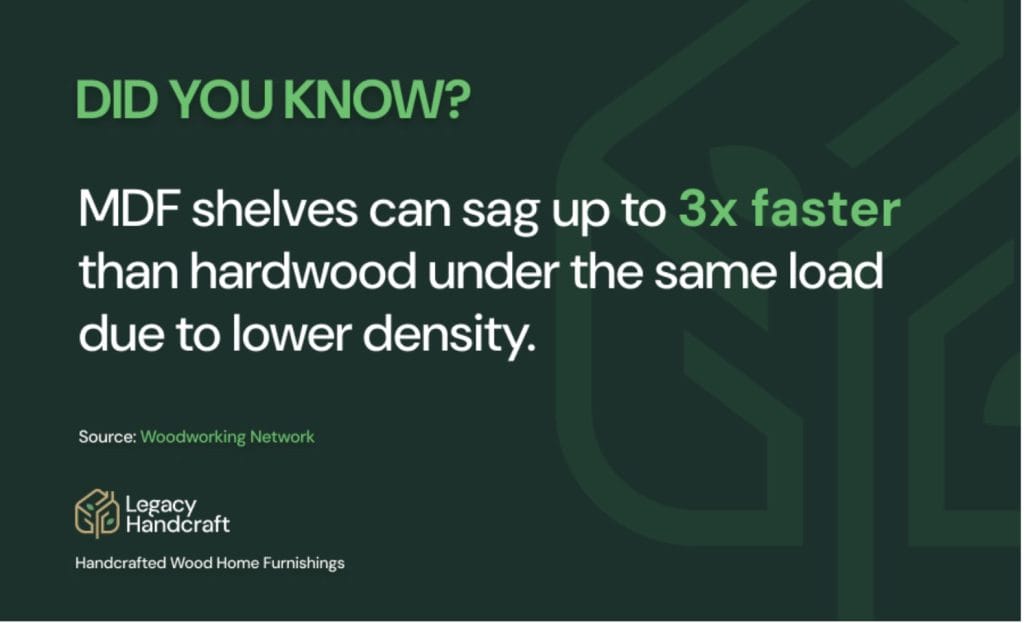
- Solid hardwood vs veneer/MDF: Thin veneers may look clean but lack internal structure for real weight
- Span: The longer the shelf, the denser and thicker the wood must be to avoid bowing
- Room type: Kitchens, office shelves, and living rooms shelves decor carry heavier loads than decorative hallways
Best Wood for Floating Shelves: Types, Strength & Long-Term Performance
When the hardware is hidden inside the wall, there’s nothing underneath to help. The wood itself has to span the distance and stay rigid.
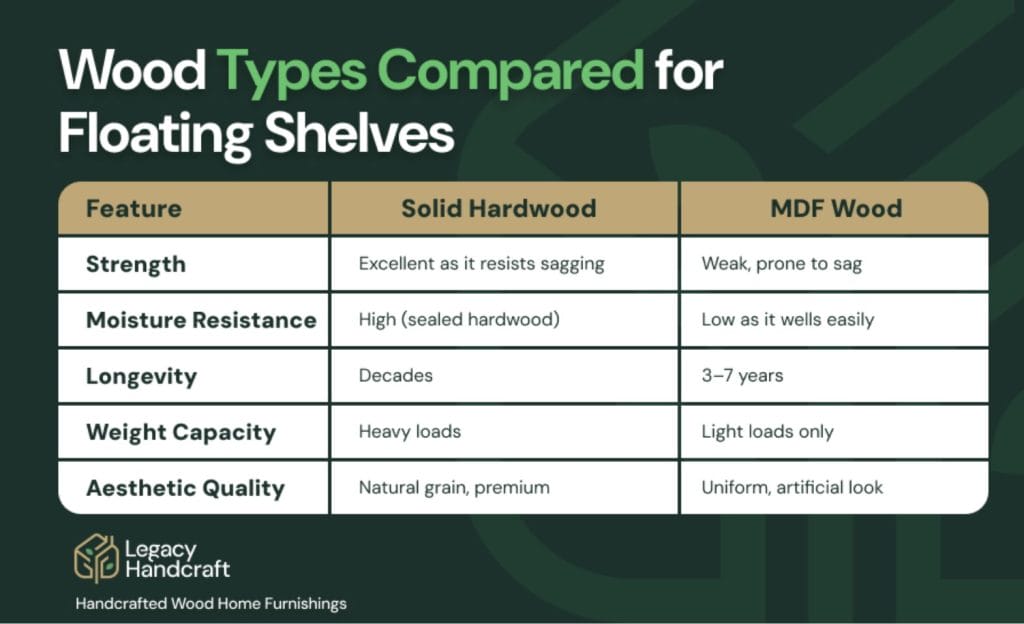
Solid Hardwood vs Engineered Wood
Solid hardwood is the gold standard for floating shelves because it offers unmatched strength and longevity. Engineered woods may look similar on day one, but they rarely offer the same support or stability over years of daily use.
Here’s how the two compare.
Why solid hardwood tends to win:
- It’s heavy. That weight translates to resistance against bending
- It holds screws tightly, which matters for concealed brackets
- It tolerates seasonal movement better than composites
- And visually, real grain has depth that veneer simply doesn’t
Engineered wood limitations:
- Lower weight capacity
- Higher likelihood of warping under humidity
- Shorter lifespan, especially in kitchens or bathrooms
- Thin veneers can chip or peel over time
Grain Density and Structural Stability
Some woods simply feel heavier in your hands, and that weight matters. A tight, slow-grown grain resists flexing, which is exactly what you want when a shelf is spanning 30 or 40 inches without visible support.
Top hardwoods for floating shelves include:
- Walnut: Dense, stable, architectural, and richly colored
- White oak: Extremely durable, water-resistant, modern in tone
- Maple: Smooth, strong, and ideal for painted or stained finishes
- Cherry: Warm, stable, and beautifully mellowing with age
- Reclaimed shelves hardwood: Eco-friendly with unparalleled character
Woods to avoid in heavy-use rooms:
- Softwoods like pine or fir, which dent easily and sag fast
- Particleboard or low-density composites, which can fail under real weight
We’ve installed pine shelves in kitchens. They looked great on day one.
Just two years later, the center had dropped just enough that stacked plates leaned inward. Nothing catastrophic, just that quiet, visible curve you can’t unsee once you notice it.
Appearance, Finish, and Stain Compatibility
Wood choice also influences how your shelves look and how easily they can be finished.
Best woods for staining:
- Walnut: deep, luxurious tones
- Oak: highlights grain beautifully with any stain
- Cherry: darkens naturally over time
Woods requiring extra prep:
- Maple: can stain unevenly without conditioner
- Softwoods: absorb stain unpredictably
For rustic or naturally textured looks:
- Reclaimed wood offers one-of-a-kind grain, patina, and warmth
Explore Legacy Handcraft Floating shelves
Shop Now
Best Wood for Kitchen Floating Shelves & Stain-Ready Finishes
Kitchens are tough on materials. Steam rises. Heat fluctuates. Dishes get stacked and unstacked every day. A kitchen floating shelf above a stove lives a very different life than one in a hallway.
That’s why species choice matters more here than almost anywhere else.
Choosing wood that excels in both durability and stain performance ensures your kitchen shelves remain straight, strong, and stunning for decades.
Woods That Handle Heat, Humidity & Daily Use
Floating shelves in kitchens live close to stovetops, sinks, and ovens, environments where temperature and moisture change throughout the day. Only certain hardwoods are naturally equipped to handle these fluctuations without warping or twisting.
Best choices for kitchen durability:
- White oak: highly water-resistant, dense, and incredibly stable
- Walnut: strong, dimensionally stable, and rich in natural oils
- Maple: smooth, durable, excellent for painted or stained finishes
- Reclaimed hardwood: already seasoned by time; extremely resistant to movement
For example, a 36-inch walnut shelf at 1.75″ thick can comfortably support everyday kitchenware when properly bracketed. The same span in pine requires either more thickness or more support to avoid bowing.
Try to avoid woods that:
- Are prone to swelling or shrinking
- Have soft, dent-prone surfaces
- Warp easily under humidity (pine, fir, MDF)
Supporting Heavy Dishes, Glassware & Cookware
Kitchen shelves often hold real weight: stacks of plates, heavy bowls, drinkware, serving platters, and sometimes even small appliances. This makes wood strength non-negotiable.
For safe, solid support, choose:
- Dense hardwoods that resist sagging
- Shelf thickness of 1.5″–2″ for long spans
- High-quality internal brackets that match the density of the wood
- Shorter spans or additional supports for cookware-heavy shelves
For kitchens especially, hardwood tends to be the safer long-term investment. While engineered options may work for lighter styling, they don’t usually perform the same way under consistent daily weight.
Cut into solid hardwood, and you’ll see growth rings that once carried water up a living tree. One was engineered in a factory; the other grew for decades
Legacy Handcraft: Elevating Your Home With Heirloom-Quality Floating Shelves
After working with solid hardwood for years, we’ve learned that the material quietly determines whether a shelf feels temporary or permanent. The difference shows up slowly in how it stays straight, how it handles daily use, and how the finish deepens instead of dulling.
At Legacy Handcraft, we believe shelves should do more than hold weight. They should add warmth, intention, and enduring beauty to every room they touch.
Whether you’re designing a kitchen that works as hard as you do, a living room that needs architectural character, or a bathroom that demands durability, heirloom-quality wood makes all the difference.
Why homeowners choose Legacy Handcraft for floating shelves:
- Solid hardwoods only for strength, stability, and long-term performance
- Moisture-resistant finishes ideal for kitchens, bathrooms, and high-humidity spaces
- Precision joinery and small-batch craftsmanship for unmatched quality
- Natural grain and rich stains that elevate both modern and traditional interiors
- Custom lengths and depths designed to fit your space with intention
- Shelves made to stay straight, hold weight, and still look right years from now
If you’re investing in open shelving, it’s worth choosing materials that will still look great years from now, not just on installation day.
FAQ’s: Best Wood for Floating Shelves
What is the best wood for floating shelves?
The best wood for floating shelves is solid hardwood such as walnut, white oak, maple, or cherry. These species offer the density, strength, and long-term stability needed to prevent sagging and warping, especially over long spans or under heavy loads.
What wood is best for floating shelves in a kitchen?
For kitchen floating shelves, choose white oak, walnut, or maple. These hardwoods resist moisture and temperature changes better than softwoods, and they support the weight of dishes, glassware, and cookware without bending.
What wood stains best for floating shelves?
Woods that absorb stain evenly and highlight natural grain include oak, walnut, and cherry. Walnut becomes richer and deeper with stain, while oak offers beautiful grain contrast in both light and dark finishes. Cherry warms naturally over time, developing a rich patina.
Is pine strong enough for floating shelves?
Pine works if the shelf is mostly for styling decorative shelves, like adding a small plant, a framed photo or something lightweight.
But for books, dishes, or anything heavy, it’s not ideal. Pine dents easily and has a tendency to move with humidity. Over time, that movement shows.
What thickness should floating shelves be to prevent sagging?
Most floating shelves perform best at 1.5 to 2 inches thick, especially when made from solid hardwood. Thinner shelves or shelves made from veneer/MDF are more likely to bow under weight. Larger spans or shelves used for heavy items (like books or dishes) benefit from thicker wood and stronger brackets.
Is reclaimed wood good for floating shelves?
Yes. Reclaimed hardwood is an excellent choice for floating shelves. It’s naturally seasoned, dimensionally stable, and incredibly strong. Reclaimed wood also brings unique character, texture, and warmth that newer wood can’t replicate.
Should floating shelves be hardwood or softwood?
Whenever possible, choose hardwood. Softwoods like pine or fir may be more affordable, but they are prone to sagging, denting, and warping over time. Hardwoods offer superior weight capacity, longevity, and moisture resistance, making them the best option for floating shelves that are meant to last.
What type of wood is best for DIY floating shelves?
For DIY projects, poplar and maple are popular because they’re easy to work with and take paint well. But if you want shelves that hold real weight and stand the test of time, upgrading to hardwoods like oak or walnut is worth the investment, especially for kitchens and high-use rooms.
Find the wood that will hold up to everyday life.
Shop now


